

Summary
Managing type 2 diabetes involves more than counting carbs or cutting sugar; a personalized, sustainable eating plan that fits your life is key to controlling blood sugar and preventing complications.
Shifting your mindset from restriction and guilt toward nourishment and balance can reduce stress and support long-term diabetes management.
Emotional eating can undermine blood sugar control, but recognizing triggers, building healthier coping mechanisms, and practicing self-compassion can help break the cycle.
Mindful eating practices, such as eating without distractions, chewing slowly, and listening to hunger and fullness cues, are linked to better glucose control and can help you make more conscious food choices.
Managing type 2 diabetes isn’t just about what goes on your plate; it’s about how you think about and interact with that plate. The journey to better diabetes management goes beyond balancing macronutrients; it involves transforming your relationship with food. By reframing the way you approach food—seeing it as fuel rather than a source of stress or guilt—you can create lasting changes in both your physical and mental well-being. Let’s explore how shifting this perspective can pave the way for better blood sugar control and a healthier, more balanced life.
The Role of Diabetes Nutrition Therapy in Managing Blood Sugar
Credits: MDPI
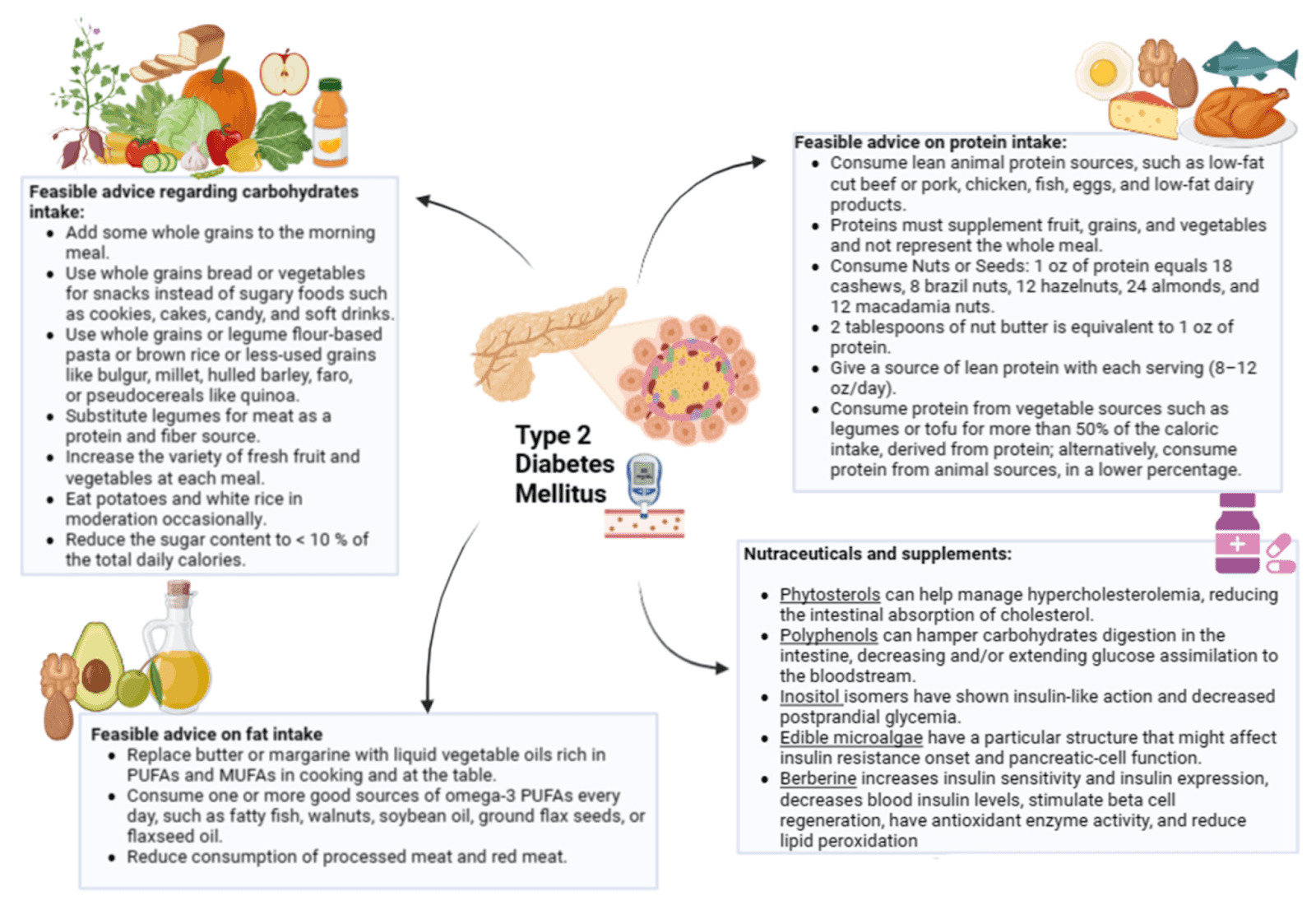
When it comes to diabetes, managing your diet isn’t a one-size-fits-all solution. Instead, it’s about creating a personalized eating plan that helps you control blood sugar levels effectively while considering your unique needs, lifestyle, and preferences. According to the American Diabetes Association (ADA), nutrition therapy for diabetes is critical because it directly impacts blood sugar levels, weight management, and overall health. It’s not just about counting carbs or cutting sugar; it’s about creating a sustainable eating plan that fits your life.
"Nutrition is a critical part of diabetes care," says Dr. Sumeet Arora, a pediatric endocrinologist. "The key is creating a balance that works for your individual needs and helps you thrive."
Incorporating balanced meals with the right amounts of protein, fats, and carbs can stabilize blood sugar levels and improve your overall energy. This approach can also prevent the complications associated with uncontrolled diabetes, like heart disease, kidney issues, and nerve damage.
Healthy Eating for Diabetes: Nourishing Your Body and Mind

Diabetes management isn’t just about the physical aspects of eating; it's also about nourishing your mind. When you’re living with diabetes, the stress of managing your condition can impact your relationship with food, often leading to emotional eating or feelings of guilt after meals. A healthy approach involves breaking free from that guilt and focusing on how to fuel your body, not punish it.
While we often hear "you are what you eat," it's just as true that "you are how you think about food." Shifting from a mindset of restriction to one of nourishment and balance is essential. Being intentional about your food choices, staying present while eating, and making decisions that align with the deeper purpose of your health goals can greatly improve your diabetes management. By approaching food with mindfulness and clarity, you reduce stress, enhance emotional well-being, and create a lasting connection with your eating habits that supports long-term health.
Emotional Eating and Diabetes: Breaking Free from Guilt and Shame

Emotional eating—using food to cope with stress, anxiety, or boredom, can sabotage even the best-laid nutrition plans. If you’ve ever reached for a bag of chips or a sugary snack after a tough day, you’re not alone. Emotional eating can be a challenge, especially when living with a chronic condition like diabetes.
However, breaking free from the cycle of emotional eating is possible. It’s about recognizing the triggers, building healthier coping mechanisms, and learning to enjoy food without judgment. Studies show that stress and emotional distress can negatively impact blood sugar control, so finding ways to manage those emotions in a healthier way can lead to better overall health outcomes.
Acknowledge the emotions behind food choices and practice self-compassion. Instead of criticizing yourself for eating something "off-limits," try shifting your focus toward how you can make a positive change moving forward.
Emotional eating can be a challenge, but learning to manage it is key for better blood sugar control. For expert tips on handling emotional eating and making healthier food choices when dining out, watch this insightful episode of the Heald Webinar Series with Dr. Saumya Sharan.
Mindful Eating for Blood Sugar Control: A New Approach to Diabetes Care
Mindful eating involves slowing down and paying attention to the sensory experience of eating—savoring each bite, noticing the flavors and textures, and checking in with your hunger and fullness cues. This approach can be particularly helpful for people with diabetes, as it allows you to make conscious choices about portion sizes, food quality, and the overall balance of your meals.
Research suggests that mindful eating can improve blood sugar control by helping you eat more intuitively, without overeating or reaching for comfort foods. A study published in the Journal of Nutrition Education and Behavior found that people with diabetes who practiced mindful eating had better glucose control and a reduced risk of obesity.
Start by focusing on the following tips:
Eat without distractions: Put away your phone and turn off the TV. Focus solely on the act of eating.
Chew slowly: Take time to enjoy your food, which can help you feel satisfied with smaller portions.
Listen to your body: Stop eating when you’re full, and avoid eating because of stress or boredom.
Engage your senses: Pay attention to the textures, smells, colors, and flavors of your food. Notice how the sight and taste of the food make you feel. This practice can increase mindfulness and enhance your overall eating experience.
By practicing mindful eating, you can become more aware of how food affects your body and blood sugar levels, which is a powerful tool for managing diabetes.
Conclusion: Transforming Your Health Journey Through a Balanced Relationship with Food

Healing your relationship with food is a transformative process, one that requires a shift in mindset, behavior, and habits. By embracing mindful eating practices, building a balanced diet, and being intentional about your food choices, you can not only improve your blood sugar control but also enhance your mental and emotional well-being. Remember, the goal is not perfection but progress. With patience, practice, and the right mindset, you can cultivate a healthier relationship with food that supports your diabetes management goals.
So, let’s take that first step towards healing our relationship with food, and ultimately, ourselves.