Summary
Nausea, bloating, constipation, and lingering fullness are the most common GLP-1 side effects, affecting 82.2% of people in a two-year semaglutide study.
These symptoms happen because GLP-1 medications slow gastric emptying, keeping food in your stomach longer (37% of a meal was still there four hours after eating in one study).
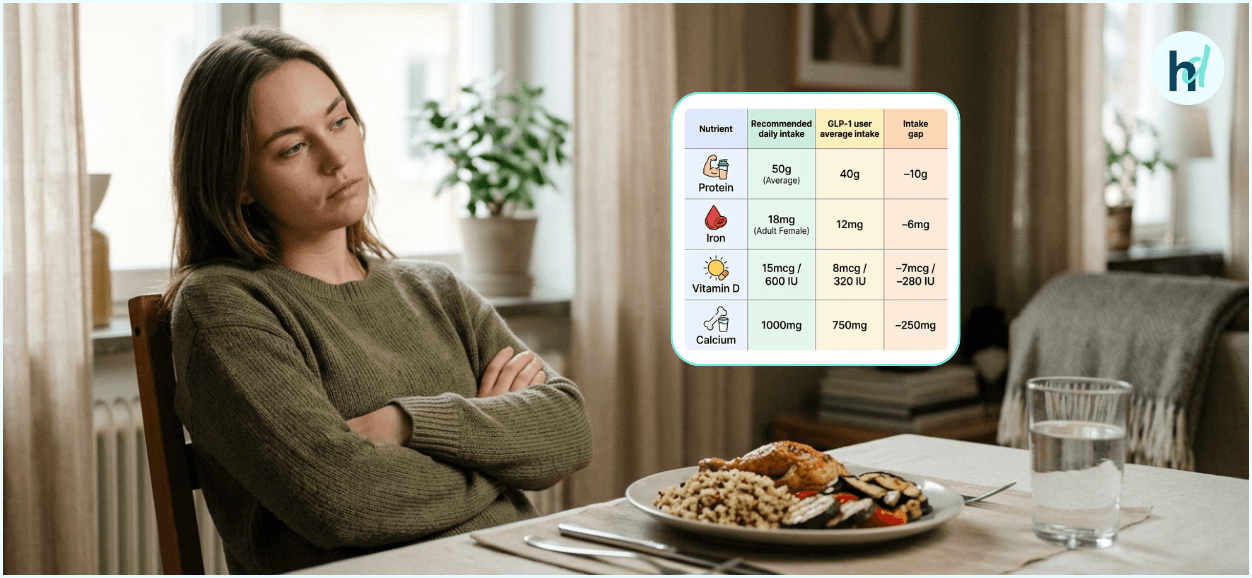
Cutting your food intake to avoid discomfort can backfire by causing micronutrient deficiencies in vitamin D, iron, and calcium, which drive fatigue, brain fog, and hair thinning.
Most people can ease symptoms without changing their dose by eating smaller, more frequent, low-fat meals, choosing soft foods, timing meals well before lying down, and sipping fluids throughout the day.
You're not alone — and you're not doing anything wrong
Nausea, bloating, constipation, and that uncomfortable fullness that lingers hours after eating are among the most reported side effects of GLP-1 medications like Ozempic, Wegovy, Mounjaro, and Zepbound. A two-year clinical study found that 82.2% of people taking semaglutide experienced mild to moderate gastrointestinal side effects, compared to 53.9% in the placebo group. If you're dealing with this, you're very much in the majority.
The good news: understanding why it happens is the first step to managing it — and most people can significantly reduce these symptoms without changing their dose.
What's actually happening in your gut
GLP-1 medications work partly by slowing gastric emptying — the rate at which food moves from your stomach to your small intestine. This is an intentional mechanism: food staying in your stomach longer contributes to the feeling of fullness that helps you eat less. A 2023 study published in Diabetes, Obesity and Metabolism found that semaglutide retained 37% of a solid meal in the stomach four hours after eating, compared to essentially no retention in the placebo group.
That delayed transit is the direct cause of nausea, bloating, and the pressure sensation many people feel after meals. Your stomach is working harder and longer than it's designed to. It's the medication doing its job — but without the right nutritional adjustments, it creates a genuinely uncomfortable experience.
Why eating less to avoid discomfort backfires
The instinct most people have is to eat less to avoid triggering the symptoms. And while smaller meals do help, dramatically cutting intake creates a second problem: nutritional depletion. A 2026 narrative review covering nearly half a million GLP-1 users found that micronutrient deficiencies — particularly vitamin D, iron, and calcium — are a common consequence of GLP-1 use, driven largely by reduced food intake.
That depletion is what causes the fatigue, brain fog, and hair thinning that often layer on top of the digestive symptoms.
What actually reduces GLP-1 digestive symptoms
These are the evidence-informed adjustments that consistently help:
Eat smaller, more frequent meals — 4–5 small meals rather than 2–3 large ones. Less volume in the stomach at one time means less distension and pressure.
Avoid high-fat meals — fat slows gastric emptying further on top of what the medication is already doing. Lower-fat meals move through faster and cause less discomfort.
Choose soft, easy-to-digest foods — particularly around dose day. Cooked vegetables, lean proteins, and easily digestible grains reduce the workload on your digestive system.
Time your meals strategically — avoid eating within 2–3 hours of lying down. Upright posture assists gastric transit.
Stay hydrated with small sips — large amounts of liquid at once can worsen bloating. Consistent small amounts throughout the day work better.