Summary
Bringing CGM data to your diabetologist visit turns the conversation from a single A1C number into a detailed story of your glucose trends, making appointments more productive and collaborative.
A CGM shows exactly how your body responds to specific foods, exercise, and daily routines, giving your doctor the information needed to build a nutrition and fitness plan around your actual metabolism instead of generic advice.
The real benefit comes from using CGM data consistently with a care team, turning daily insights into lasting habits and letting your plan evolve as your health improves.
A1C is only an average and can hide dangerous swings between highs and lows, while CGM data reveals that variability so your doctor can make faster, more precise treatment adjustments.
If you’ve ever left a doctor’s appointment feeling like you received generic advice, you’re not alone. The truth is, without detailed information, it’s hard for any doctor to provide a truly personalized plan. An A1C number is just an average, and a few daily glucose readings can’t reveal the patterns that drive your health. This is where technology can bridge the gap. Using a continuous glucose monitor (CGM) provides a rich, detailed narrative of your body’s daily responses. When you bring this information to your appointment, the conversation shifts from vague suggestions to specific, actionable strategies. A diabetologist consultation with CGM integration uses your personal data to build a plan that finally fits your life and your metabolism.
Key Takeaways
Make your doctor's visits more productive: Instead of relying on a single A1C number, CGM data provides a detailed story of your glucose trends. This allows you and your doctor to have more effective, collaborative conversations and make decisions based on what’s happening in your body right now.
Build a plan that’s truly yours: A CGM shows you exactly how your body responds to specific foods, exercises, and daily routines. This personalized feedback is the key to creating a targeted nutrition and fitness plan that moves beyond generic advice and works for your unique metabolism.
Turn daily insights into lasting habits: The real power of a CGM comes from using it consistently with a supportive care team. This partnership helps you translate raw data into sustainable lifestyle changes, ensuring your health plan evolves as you make progress toward your goals.
What is a Diabetologist, and Do You Need One?
When you’re managing a condition like type 2 diabetes, your primary care physician is an essential part of your team. But sometimes, you need to call in a specialist who lives and breathes diabetes care every single day. That’s where a diabetologist comes in. Think of them as a highly focused expert dedicated to helping you manage your health with precision and deep knowledge.
While not every person with diabetes needs a diabetologist, understanding what they do can help you decide if adding one to your care team is the right next step for you. Their specialized perspective can be particularly valuable when you’re aiming for significant lifestyle changes and tight glucose control.
The Expertise a Diabetes Specialist Offers
So, what exactly is a diabetologist? A diabetologist is a medical professional who specializes entirely in diagnosing and treating diabetes. They handle all forms of the condition, including Type 1, Type 2, and gestational diabetes, and are deeply familiar with the nuances of each. Their expertise goes beyond daily blood sugar readings; they focus on the big picture, helping you manage or prevent long-term complications like nerve damage (neuropathy) or kidney issues (nephropathy). They are also experts in using advanced tools like insulin pumps and continuous glucose monitors (CGMs) to fine-tune your treatment plan and give you the best possible outcomes.
Signs It's Time to See a Diabetologist
You might wonder if your situation calls for a specialist. It’s a great question to ask yourself as you become more proactive about your health. It may be time to consult a diabetologist if you find yourself in one of these situations:
Your blood sugar levels are difficult to control, despite your best efforts.
You’re starting to experience diabetes-related complications.
You have other health conditions, like heart or kidney disease, that make managing your diabetes more complex.
You feel you need more in-depth education and counseling to confidently manage your health.
A specialist can provide the targeted support and advanced strategies needed to get you back on track.
What is Continuous Glucose Monitoring (CGM)?
If you’ve been managing type 2 diabetes with finger pricks, you know they only give you a snapshot of your glucose at a single moment. A continuous glucose monitor, or CGM, is different. Think of it as a movie of your glucose levels, tracking them in real-time, 24/7. This technology gives you a continuous stream of information, showing you not just where your glucose is, but where it’s been and where it’s headed.
This complete picture is a game-changer. It helps you and your care team see exactly how your body responds to meals, exercise, stress, and sleep. Instead of guessing what caused a high or low reading, you can see the patterns unfold. This data is the foundation for making informed, personalized decisions that move you closer to your health goals. It turns abstract numbers into actionable insights about your unique body, empowering you to take control of your health journey with confidence.
How a CGM Works
You might be picturing something complicated, but the way a CGM works is surprisingly straightforward. The system has two main parts: a tiny sensor and a reader. The sensor is a flexible filament, about the size of an eyelash, that you insert just under your skin, usually on your arm or belly. It’s held in place with an adhesive patch and is typically painless to apply.
Instead of measuring glucose in your blood, the sensor measures it in the interstitial fluid, which is the fluid surrounding your cells. Every few minutes, it sends this information wirelessly to a reader, which can be a dedicated device or an app on your smartphone. This allows you to see your glucose levels at a glance and get alerts if your levels are trending too high or too low, helping you take action before a problem arises.
A Quick Look at Different CGM Systems
Not all CGMs are the same, and the right one for you depends on your lifestyle and preferences. The most common type is the Real-Time CGM (rtCGM). This system constantly sends data to your reader or phone and can sound an alarm if your glucose goes out of your target range. It’s great for anyone who wants immediate feedback without having to think about it.
Another option is an Intermittently Scanned CGM (isCGM), sometimes called a "flash" system. With this device, you need to scan the sensor with your reader or phone to get a glucose reading. It still collects data continuously in the background, but you pull the information on demand. Both types of personal CGMs empower you to track your glucose trends and make proactive choices throughout your day.
CGM vs. Finger Pricks: What's the Difference?
The biggest difference between using a CGM and traditional finger pricks is the story the data tells. A finger prick gives you one number, a single data point representing a moment in time. It’s useful, but it lacks context. You know your glucose was 160 mg/dL after lunch, but you don’t know if it was on its way up or down.
A CGM, on the other hand, provides the full narrative. It shows you the trend lines, revealing the impact of that specific meal over several hours. This continuous data helps you understand the cause and effect of your daily habits. Seeing these patterns allows you and your care team to make much more precise adjustments to your nutrition, activity, and medication, leading to better control and a deeper understanding of your own body.
How CGM Data Can Transform Your Doctor's Visit
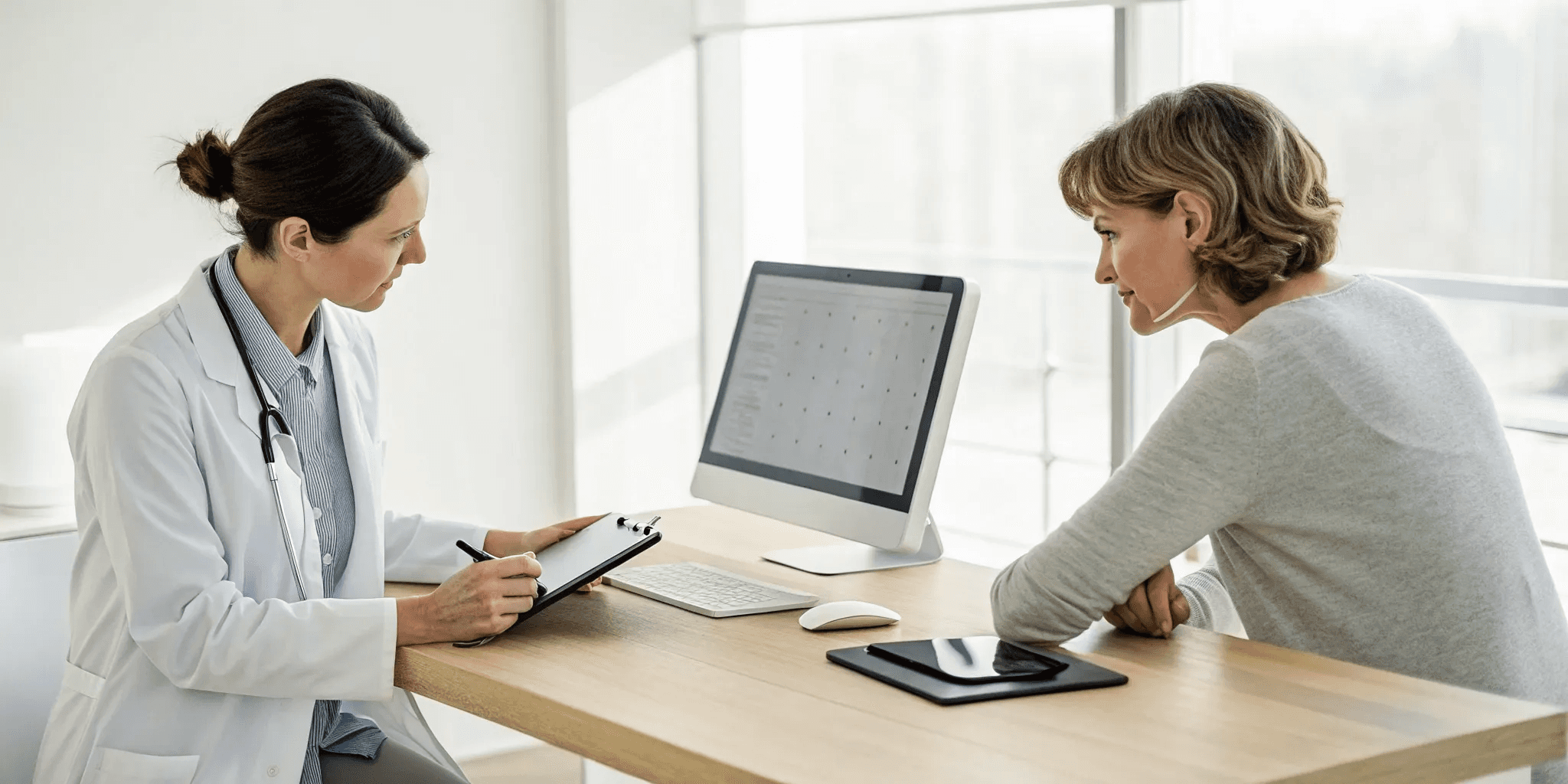
Walking into your diabetologist's office armed with CGM data is a complete game-changer. Instead of relying on a few finger-prick numbers or a three-month-old A1C result, you’re bringing a detailed story of how your body responds to your life in real time. This rich information allows for a much more productive and personalized conversation, moving your care from reactive to proactive. Your doctor can see the direct impact of that new lunch spot or your evening walk, helping you connect the dots between your daily choices and your glucose levels.
See the Full Picture of Your Glucose Trends
Think of traditional glucose testing as taking a single photograph of a busy day. You only capture one moment. A continuous glucose monitor, on the other hand, is like a time-lapse video. It gives you and your doctor a comprehensive view of glucose levels over days and weeks, revealing patterns you’d otherwise miss. You can finally see what happens while you sleep, how a stressful meeting affects you, or how your body reacts two hours after a specific meal. This continuous data helps your doctor identify trends and make real-time adjustments to your plan, ultimately helping you avoid the highs and lows that a simple logbook can’t predict.
Get Faster, More Accurate Treatment Changes
When your doctor has access to detailed CGM data, they can make faster and more confident decisions about your care plan. There’s less guesswork involved. Studies show that using CGM can lead to significant improvements in blood sugar control, often on par with seeing a specialist in person. Instead of waiting three months to see if a change is working, your doctor can analyze a week or two of data and make precise adjustments to your medication, nutrition, or activity routine. This means you get on the right track sooner and spend less time on strategies that aren't delivering the results you want.
Why Your A1C Doesn't Tell the Whole Story
Your A1C is a helpful metric, but it’s just an average of your blood sugar over the past two to three months. An A1C of 7% could mean your glucose is stable most of the time, or it could mean you’re swinging between very high and very low numbers. That’s a critical distinction that the A1C number alone can’t show. CGM data provides a more detailed view of glucose variability and daily trends, giving your doctor the context behind the average. This insight is key for making informed medication adjustments, like fine-tuning insulin doses, to help you spend more time in your target range and reduce your risk of hypoglycemia.
Your First Doctor's Visit with CGM Data: What to Expect
Walking into your doctor's office with CGM data changes the entire conversation. Instead of relying on a few finger-prick numbers or a three-month A1C average, you’re bringing a detailed story of your body’s daily life. This shifts the dynamic from a lecture to a collaboration. You become an active partner in your own care, equipped with the information needed to make truly personalized decisions.
This visit is your chance to move beyond guesswork. Expect a more in-depth and productive discussion that puts you in the driver’s seat. Your doctor can now see the direct impact of your meals, activities, and sleep, allowing for adjustments that are both precise and effective. It’s about turning raw data into a clear, actionable strategy for your health.
How to Prep Your CGM Data Before You Go
Before your appointment, take some time to get familiar with your own data. Look for patterns in your app. Did you notice a spike after a certain meal? A dip during your afternoon walk? Jot down a few notes about specific days or events. This context is invaluable because your doctor sees the numbers, but you know the story behind them. People are often very interested to use their CGM to understand how their lifestyle affects their blood sugar, and this is your opportunity to do just that. Coming prepared with a few key observations will make your visit incredibly focused.
A Step-by-Step Look at the Appointment
Once you’re in the room, your CGM data will likely be the main event. It’s now standard practice for specialists to review CGM data with you during your visit. Your doctor will probably pull up your reports on a screen, showing graphs of your glucose trends, time in range, and any highs or lows. This is where your prep work pays off. As they point to a specific spike, you can add the context: “That was the morning I tried oatmeal for breakfast.” This turns the appointment into a collaborative analysis, helping you fine-tune your care plan together.
How Your Doctor Connects Data to Your Daily Life
This is where the data truly comes to life. A CGM is a powerful tool for diabetes management because it reveals cause-and-effect relationships that a few daily finger pricks could never capture. Your doctor can use this information to pinpoint exactly how a small change in your routine, like adding a 10-minute walk after dinner, directly impacts your glucose levels. This detailed feedback loop is incredibly motivating. Instead of just being told what to do, you can see the results for yourself, which helps you feel more in control of your health and confident in the changes you’re making.
The Real Benefits of Using a CGM with Your Doctor
Walking into your doctor's office with CGM data completely changes the conversation. Instead of relying on a single A1C number or a few finger-prick readings, you and your doctor can see the full story of how your body responds to food, exercise, stress, and sleep. This detailed information moves the discussion from guesswork to strategy, allowing for a level of personalization that was previously out of reach. It’s about making smarter, more informed decisions together.
This partnership between you, your doctor, and your data is where the real transformation happens. You’re no longer just a patient receiving instructions; you're an active participant in co-creating a health plan that fits your life. The benefits go far beyond just numbers on a screen. They translate into better health, greater confidence, and a renewed sense of control over your well-being.
Better Blood Sugar Control and Fewer Lows
One of the most immediate benefits of using a CGM is the ability to see your glucose levels in real time. This continuous feedback loop allows you and your doctor to make quick, effective adjustments to your plan. According to diabetes specialists, this real-time data is incredibly valuable for reducing the frequency of severe low blood sugar events, which can be frightening and dangerous. Instead of waiting three months for an A1C test, you can spot a pattern after just a few days and work with your doctor to address it, preventing small issues from becoming bigger problems.
Feel More in Control of Your Health
Living with diabetes can sometimes feel like you're reacting to your body's unpredictable demands. A CGM helps shift that dynamic entirely. By showing you the direct impact of your daily choices, from the walk you took after lunch to how a stressful meeting affected you, it puts you back in the driver's seat. Patients often express that this technology empowers them to understand their bodies on a deeper level, fostering a powerful sense of control over their health management. This newfound confidence is a game-changer, turning anxiety and uncertainty into proactive, informed action.
Fine-Tune Your Lifestyle with Personalized Insights
Your body is unique, and a one-size-fits-all approach to diabetes management simply doesn’t work. CGM data provides the personalized insights needed to fine-tune your lifestyle with incredible precision. Your doctor can see exactly how you respond to different carbohydrates or what time of day is best for you to exercise. This information helps create a plan that’s not just effective but also sustainable for your real life. It can also guide medication adjustments, potentially reducing your reliance on insulin and minimizing the risk of hypoglycemia, ultimately improving your overall quality of life.
Common CGM Challenges and How to Handle Them
Starting with a CGM is a huge step forward, but it can come with a few hurdles. It’s normal to have questions about the cost, the technology, or what to do with all the new information. The good news is that these challenges are common and manageable with the right support. Think of it less as a roadblock and more as part of the learning curve. Let's walk through how to handle them so you can focus on what really matters: improving your health.
Dealing with Insurance and Costs
Let’s be honest: the cost of a CGM and navigating insurance can be a headache. The reality is that insurance coverage for CGM varies widely depending on your plan. Your best first step is to call your insurance provider directly to understand what your policy covers for type 2 diabetes. While this process can be frustrating, remember that a CGM is an investment in your long-term health. Programs like Heald integrate CGM use into a complete care plan, helping you get the most value from the technology and ensuring it leads to real, sustainable results.
Getting Comfortable with the Technology
Wearing a small device 24/7 can feel strange at first. You might worry about applying the sensor correctly or just getting used to it. This is where a great support system makes all the difference. You don't have to become a tech expert overnight. A dedicated care team can walk you through the setup, answer questions, and help troubleshoot any issues. With the right guidance, patients find CGM programs just as comfortable as regular visits. Soon enough, checking your glucose on your phone will feel as natural as checking the time.
Making Sense of All the Data
A CGM provides a constant stream of data, which is powerful but can also feel overwhelming. The goal is to turn that data into clear, actionable insights. This is where your doctor and care team become essential partners. They help you see the patterns, connecting your glucose trends to your meals, activity, and sleep. Diabetes specialists consistently review this data with patients to make informed decisions. Instead of feeling swamped by information, you’ll start to feel more in control, understanding exactly how your choices affect your body in real time.
Get the Most Out of Your Next Appointment
Walking into your doctor's office armed with CGM data is a game-changer. But to truly make the most of that short appointment time, a little preparation goes a long way. Instead of just showing up, you can arrive as an informed partner in your own health journey. By organizing your data, thoughts, and questions beforehand, you help your diabetologist move beyond guesswork and get straight to creating a plan that works for you. This preparation ensures your conversation is focused, productive, and tailored to your unique experience. Think of it as creating the agenda for the most important meeting you'll have: the one about your health. Taking these simple steps transforms your visit from a routine check-up into a powerful strategy session.
Review Your Data and Note Your Symptoms
Before your appointment, spend some time with your CGM reports. You don’t need to be an expert, just an observer of your own body. Look for patterns. Do you see a spike every morning after breakfast? A dip in the afternoon? How did your glucose levels react to that stressful work meeting or that evening walk? Just as important, connect the numbers to how you felt. Note any times you felt fatigued, dizzy, irritable, or especially energetic. Diabetes specialists value CGM because it provides this continuous story. Jotting down a few notes like, “Felt shaky Tuesday at 3 PM when my glucose dropped to 65 mg/dL,” gives your doctor crucial context that a simple A1C number could never provide.
Create a List of Questions for Your Doctor
Curiosity is your best tool for managing your health. As you review your data, questions will naturally come up. Write them down! A prepared list ensures you don’t forget anything important when you’re sitting in the exam room. Your questions can be specific to the data you’ve collected. For example, you could ask, “I see my glucose stays high for hours after I eat pasta. What adjustments can I make?” or “My levels are highest in the morning. What does that mean?” This approach shows you’re engaged and helps your doctor give you practical, personalized advice. It’s your chance to understand how your lifestyle affects your blood sugar on a deeper level.
Have Your Medical Info and Medications Ready
Your CGM data is one piece of a larger puzzle. To see the whole picture, your doctor needs all the other pieces, too. Make a current list of everything you take, including prescription medications, over-the-counter drugs, vitamins, and supplements. Be sure to include the dosages and how often you take them. If you have other recent lab results or have been tracking other health metrics like blood pressure or weight, bring that information along. When an endocrinologist reviews your case, they consider your CGM data alongside other patient information to make the best recommendations. Having everything organized and ready makes your appointment more efficient and helps your doctor provide the most comprehensive care possible.
How Your CGM Data Leads to a Truly Personal Plan
Generic advice like "eat fewer carbs" or "exercise more" is a frustratingly vague starting point for managing type 2 diabetes. Why? Because every single body is different. The slice of pizza that barely moves your friend’s glucose levels might send yours on a rollercoaster. This is where continuous glucose monitoring (CGM) changes the game. It moves you from a world of guesswork into one of precision, providing a constant stream of information that’s 100% unique to you.
Think of your CGM data as a detailed instruction manual for your own body. It’s the key that unlocks a truly personal plan, one that’s built around your metabolism, your lifestyle, and your daily routines. Instead of following rules that may or may not work for you, you and your care team can use this real-time feedback to make targeted, effective adjustments. This data-driven approach allows you to understand the direct impact of your choices, empowering you to build a sustainable lifestyle that puts you in control of your health. It’s not about restriction; it’s about understanding and responding to your body’s specific needs.
Pinpoint How Your Body Responds to Food and Activity
A CGM gives you a front-row seat to your metabolism in action. You can see, in near real-time, how your blood sugar levels react to specific foods and activities. That bowl of oatmeal you thought was a healthy choice might be causing a bigger spike than you realized, while a brisk walk after dinner could visibly flatten your glucose curve. This detailed information is incredibly powerful. The American Association of Clinical Endocrinology highlights that this feedback loop helps you and your doctor make personalized adjustments to your diet and exercise. You’re no longer guessing what works; you’re seeing it, learning from it, and building a plan based on your body’s unique responses.
Tailor Your Nutrition and Medication Timing
Do you notice your glucose is always high in the morning or dips every afternoon? CGM data reveals these daily patterns that finger pricks often miss. Identifying these trends is crucial for fine-tuning your routine. For example, seeing a consistent morning spike might mean shifting your breakfast choices or adjusting the timing of your medication. According to research, healthcare providers can use these patterns in blood glucose levels to better inform the timing of meals and medications. This allows for strategic, proactive changes that help keep your glucose stable throughout the day, preventing frustrating highs and lows before they happen.
Get Smarter Exercise Recommendations
We all know exercise is important, but a CGM can help you figure out what kind of movement gives you the most benefit. You might discover that a 20-minute strength training session before lunch has a more stabilizing effect on your glucose than an hour-long walk in the morning. This insight allows you to get much more strategic with your fitness. By seeing how your glucose fluctuates during different activities, you can work with your care team to create tailored exercise recommendations that fit your life and have the biggest positive impact on your blood sugar. It’s about finding what works for your body and making every movement count.
Using Technology for Long-Term Success
Your CGM is more than just a tool for doctor's appointments; it’s your partner in building a healthier life. When you connect this powerful data stream to a dedicated care team, you move from reactive check-ins to proactive, continuous support. This approach transforms diabetes management from a series of isolated events into a seamless, ongoing conversation about your health. Instead of waiting months to discuss a problem, you can get feedback and make adjustments in real time.
Technology makes it possible for your health plan to be a living, breathing thing that adapts right along with you. When your doctor, nutritionist, and health coach can all see your real-time data, their advice becomes more cohesive and effective. This connected system ensures that every piece of guidance you receive, from meal suggestions to medication timing, is based on a complete and current understanding of your body’s needs. It’s this combination of smart technology and human expertise that creates the foundation for lasting change.
How Your Doctor Can Monitor Your Progress Remotely
Traditionally, your doctor only sees your glucose data during a scheduled visit. In fact, one study found that very few specialists review CGM data between appointments. This practice, known as remote patient monitoring, is a game-changer for managing your health proactively. Instead of waiting for your next check-up to address a concern, a care team that monitors your data can spot trends as they happen. This allows them to offer timely advice, celebrate your wins, and help you make small adjustments before they turn into bigger issues. It’s like having a safety net, ensuring you’re always supported on your health journey.
The Power of Sharing Real-Time Data with Telehealth
Pairing your CGM with telehealth appointments makes getting expert care incredibly convenient and effective. You no longer have to take time off work or travel to a clinic to discuss your progress. With real-time data at their fingertips, your care team can have a meaningful conversation with you from anywhere. Research shows that patients find a CGM-enhanced eConsult program just as valuable as in-person visits. This approach allows for quicker, more frequent check-ins, so your treatment plan can be fine-tuned based on what’s happening in your life right now, not what was happening three months ago.
How Your Entire Care Team Stays on the Same Page
Managing type 2 diabetes often involves more than one expert. You might work with a doctor, a nutritionist, and a fitness coach. Technology ensures they all work together seamlessly. When your entire care team has access to your CGM data, their advice becomes unified and powerful. For example, an endocrinologist can review your glucose trends and send an eConsult report to your nutritionist with specific recommendations. This means the meal plan you receive is perfectly aligned with your doctor’s guidance. This collaborative approach eliminates conflicting advice and ensures every part of your plan works in harmony to support your goals.
Make Your CGM-Powered Care a Long-Term Success
Using a CGM is more than just a way to prepare for your next doctor's visit. It’s a tool for building a continuous, collaborative relationship with your health team. The real power of this technology comes from using the data consistently to refine your approach over time, turning those daily glucose insights into sustainable habits that move you closer to your health goals, whether that’s better management or even reversal.
Think of it as a shift from periodic snapshots of your health to a continuous conversation. Instead of relying on a single A1C number every few months, you and your team get to see the full story of how your body responds to food, activity, stress, and sleep every single day. This ongoing cycle of data, feedback, and adjustment is what transforms a temporary fix into a long-term strategy. When you and your care team are on the same page, you can work together to create a plan that evolves with you. This partnership ensures your efforts lead to lasting results, helping you build a foundation for better health that stands the test of time. It’s about moving beyond simply tracking numbers and toward truly understanding your body and making informed choices that last.
Set Up a Schedule for Regular Check-ins
Your CGM data is most powerful when it’s reviewed regularly, not just once every few months. While most specialists look at CGM reports during appointments, many don’t have a system for checking in between visits. This can leave you trying to interpret confusing trends on your own. A proactive approach is much more effective. Setting a consistent schedule for check-ins, even brief virtual ones, ensures that small issues are addressed before they become bigger problems.
This is where having a dedicated care team makes a huge difference. With access to remote patient monitoring, your team can see your data and offer guidance in near real-time. You can get answers to your questions as they come up, not weeks later. This consistent support loop helps you stay on track and feel confident in your day-to-day decisions.
Adjust Your Plan as Your Health Improves
Your health is dynamic, and your care plan should be too. As you make positive changes to your nutrition and activity levels, your body’s needs will change. The detailed feedback from your CGM provides the clear evidence your doctor needs to update your plan safely and effectively. This data-driven approach allows for precise adjustments that reflect your progress.
For many people, this can be incredibly empowering. For example, clear CGM data can help your doctor guide medication changes, sometimes leading to a reduced need for medications like insulin. This creates a positive feedback loop: your lifestyle efforts show up in the data, which then allows your doctor to fine-tune your treatment. It’s a personalized process that keeps you from hitting a plateau and ensures your plan always matches your current health status.
Create Lasting Habits for Better Health
Ultimately, data is just information. Its true value lies in its ability to help you build healthier habits that stick. A CGM can show you the immediate effect of a walk after a meal or how a poor night's sleep impacts your morning glucose, but turning that insight into an automatic behavior is the next step. This is where consistent education and support become essential.
Having a team that includes behavioral coaches and nutritionists can help you translate your data into small, manageable actions. They can provide the patient education and ongoing support needed to understand not just what to do, but how to integrate these changes into your life. This focus on habit formation is what turns short-term wins into a sustainable lifestyle, making long-term success feel achievable.