
Summary
Resistance training improves insulin sensitivity and helps muscles take up glucose, which supports type 2 diabetes reversal over time.
Muscle contractions during strength training pull glucose into cells without needing insulin, and training also boosts GLUT-4 transporters that move glucose from blood into muscle.
The ADA recommends resistance training at least twice a week alongside 150 minutes of aerobic activity, and research links it to meaningful drops in HbA1c and fasting glucose.
You don't need a gym: bodyweight moves, resistance bands, or light dumbbells done 2-3 times a week can lower blood sugar, reduce visceral fat, and cut reliance on medication.
When it comes to reversing type 2 diabetes, most people first think of cutting carbs or avoiding sugar. But there's a metabolic powerhouse that’s often overlooked—resistance training. Far from just building muscle, strength workouts have been shown to significantly improve insulin sensitivity, increase glucose uptake by muscles, and play a role in reversing type 2 diabetes over time.
Let’s unpack the science behind it and how to practically include it in your diabetes care routine.
Boosting Insulin Sensitivity: How Strength Workouts Lower Blood Sugar
Type 2 diabetes is characterized by insulin resistance, where the body makes insulin, but the cells don’t respond to it effectively. Resistance training helps reverse this resistance.
During and after a strength workout, muscle cells become more sensitive to insulin, making it easier for glucose to enter cells and be used for energy instead of remaining in the bloodstream.
“You don’t just burn calories during strength training—you change how your muscles behave with glucose. It’s like updating the software in your body’s metabolism.”
— Dr. Sumeet Arora, “Smart Eating for Diabetes” Webinar, Heald.Diabetes
A study published in Diabetologia (2017) found that after 16 weeks of resistance training, older adults with type 2 diabetes showed a 46.3% improvement in insulin sensitivity, an effect that rivals or surpasses some medications.
The Science of Muscle Glucose Uptake and Resistance Training
Skeletal muscle is one of the largest glucose sinks in the body, meaning it can absorb large amounts of glucose when activated.
When muscles contract during resistance training, they use a mechanism called contraction-mediated glucose uptake. This process allows glucose to enter cells without requiring insulin, a crucial advantage for people with insulin resistance.
Additionally, strength training increases the amount and activity of GLUT-4 transporters, the proteins that move glucose from the bloodstream into muscle cells. This improvement enhances both immediate and long-term glucose regulation.
A 2021 review in the Journal of Diabetes Investigation confirmed that resistance training upregulates GLUT-4 expression, directly improving glucose handling at the cellular level.
Evidence-Based Insights: Resistance Training and Diabetes Management
The research is clear: strength training is not just helpful, it’s essential for people with type 2 diabetes.
The American Diabetes Association (ADA) recommends resistance training at least two times per week for adults with type 2 diabetes, in addition to 150 minutes of aerobic activity per week.
A meta-analysis published in Sports Medicine (Strasser et al., 2010) found that resistance training led to a significant reduction in HbA1c—an average decrease of 0.57%. This is considered clinically meaningful, as even a 0.5% drop is associated with reduced complications.
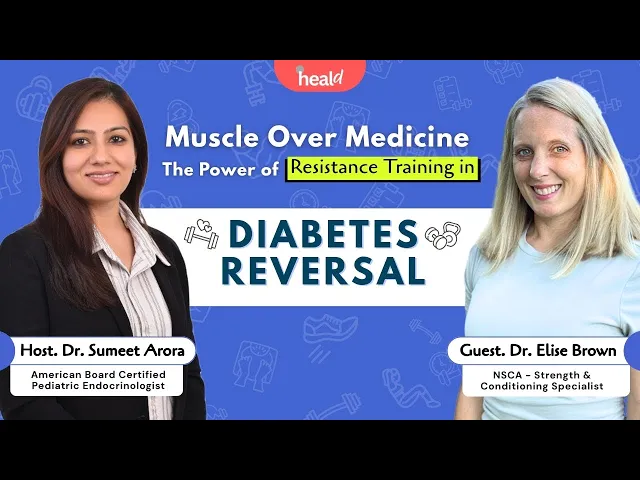
To hear directly from experts on why strength training may be more effective than medication in reversing type 2 diabetes, tune into the Five Rivers podcast as Dr. Sumeet Arora interviews Dr. Elise Brown in Muscle Over Medicine—a practical, science-backed conversation packed with workout templates, clinical research, and actionable tips.
Strength training also helps:
Decrease visceral fat, a driver of insulin resistance
Improve lipid profiles
Reduce inflammatory markers
Enhance energy and mood
It’s a cornerstone for not just managing diabetes—but reversing it.
Expert Tips and Workout Recommendations for Strength Training
You don’t need a gym or heavy weights to get started. Bodyweight exercises, resistance bands, or light dumbbells can be highly effective.
Beginner 3-Day Resistance Training Plan
Day | Focus | Exercises |
|---|---|---|
Day 1 | Lower Body | Squats, glute bridges, step-ups |
Day 2 | Upper Body | Wall push-ups, dumbbell rows, overhead press |
Day 3 | Core & Stability | Planks, bird-dogs, dead bugs |
Training Guidelines:
Start with 2–3 sets of 8–12 reps
Rest for 60–90 seconds between sets
Perform workouts 2–3 times per week
Prioritize correct form and consistency over intensity
“If you follow the right meal sequence, move your body, manage stress, and monitor what your glucose is doing—not only do you control diabetes, you start reversing it.”
— Dr. Sumeet Arora, “Smart Eating for Diabetes” Webinar, Heald.Diabetes
Conclusion: Building Strength for Long-Term Diabetes Reversal
Resistance training isn’t just about fitness, it’s about metabolic transformation. By improving insulin sensitivity, increasing muscle glucose uptake, and lowering HbA1c, it targets the root mechanisms of type 2 diabetes.
Even two well-structured workouts a week can lead to:
Lower fasting glucose
Reduced post-meal spikes
Better energy and weight control
Reduced reliance on medications
And with tools like CGM (Continuous Glucose Monitoring) and data-driven platforms like the Heald app, you can now see exactly how your body responds to strength workouts in real time.
The path to reversal doesn’t require perfection. It requires progress. And picking up a resistance band or doing a bodyweight squat might be one of the most effective steps you can take.