Summary
Muscle loss with age isn't just about eating less protein — it's also driven by reduced muscle responsiveness to protein and exercise signals.
Resistance training is one of the strongest ways to restore anabolic signaling and support muscle protein synthesis in older adults.
Older adults often need more protein per meal than younger adults, and leucine-rich, high-quality protein sources may help.
Sarcopenia is a clinical condition defined by loss of muscle mass and strength, and early action matters.
What causes muscle loss in aging beyond low protein intake?
Muscle loss in aging is not explained by protein intake alone. Older skeletal muscle often becomes less responsive to amino acids and exercise, a phenomenon called anabolic resistance, which weakens muscle protein synthesis even when protein is available.
Age-related muscle loss is shaped by a combination of anabolic resistance, lower physical activity, inflammation, hormonal changes, and altered signaling inside muscle cells. In practical terms, the muscle “listens” less effectively to the usual growth signals from food and exercise.
This is why two people can eat similar amounts of protein and still respond differently. Older muscle may require a stronger stimulus, better protein quality, and regular resistance exercise to trigger the same synthetic response seen in younger adults.
Research reviews also note that inactivity itself can worsen anabolic resistance at any age, which means sedentary behavior can accelerate decline even before frailty becomes obvious. That makes early movement and strength training central, not optional.
A review on older adults suggests about 0.4 g protein/kg per meal, or roughly 1.2–1.6 g/kg/day, may be needed to account for anabolic resistance.
A classic review found that reduced physical activity alone can produce anabolic resistance, and increasing amino acids may not fully overcome it without exercise.

Photo by Yan Krukau on Pexels.
How do resistance signaling pathways affect aging skeletal muscle?
Resistance signaling pathways such as mTORC1 and IGF-1 help switch muscle from breakdown mode to building mode. With aging, these pathways often respond less robustly, so the same meal or workout produces a smaller muscle-building signal.
mTORC1 is widely described as a central regulator of muscle protein synthesis, while IGF-1 signaling helps support anabolic processes in skeletal muscle. When these pathways are less responsive, muscle hypertrophy becomes harder to achieve and maintain.
Aging does not shut these pathways off completely. Instead, it tends to blunt the response, which is why resistance training and adequate protein can still work, but often need to be more intentional and consistent.
Inflammation is another important piece of the puzzle. Age-associated inflammatory changes can interfere with muscle’s ability to respond to exercise and nutrition, adding another layer to why muscle loss is more than a simple calorie or protein problem.
A PubMed review identifies mTORC1 as a primary regulator of muscle protein synthesis and a key node affected by aging.
A resistance-training study in older adults showed that supervised training increased muscle protein incorporation and improved knee extensor torque.
Photo by LinkedIn Sales Navigator on Pexels.
Can resistance training restore muscle protein synthesis in older adults?
Yes. Resistance training is one of the most effective ways to improve muscle protein synthesis in older adults because it provides a strong mechanical signal that helps re-sensitize aging muscle to growth stimuli.
Resistance exercise helps muscle adapt by increasing the demand for repair and remodeling. That demand activates anabolic signaling, supports muscle fiber maintenance, and improves strength even when age-related anabolic resistance is present.
Evidence consistently shows that older adults benefit from progressive resistance training, especially when programs are supervised and performed regularly. The goal is not just to “exercise more,” but to challenge muscle enough to trigger adaptation.
Training does not need to be extreme to help. Even moderate programs can improve strength and function, and the benefits are greater when resistance work is paired with adequate protein intake and recovery.
A meta-analysis and review literature support resistance training as a countermeasure to age-related muscle loss.
A trial in older adults found resistance training increased mixed muscle protein synthesis compared with pre-training levels.
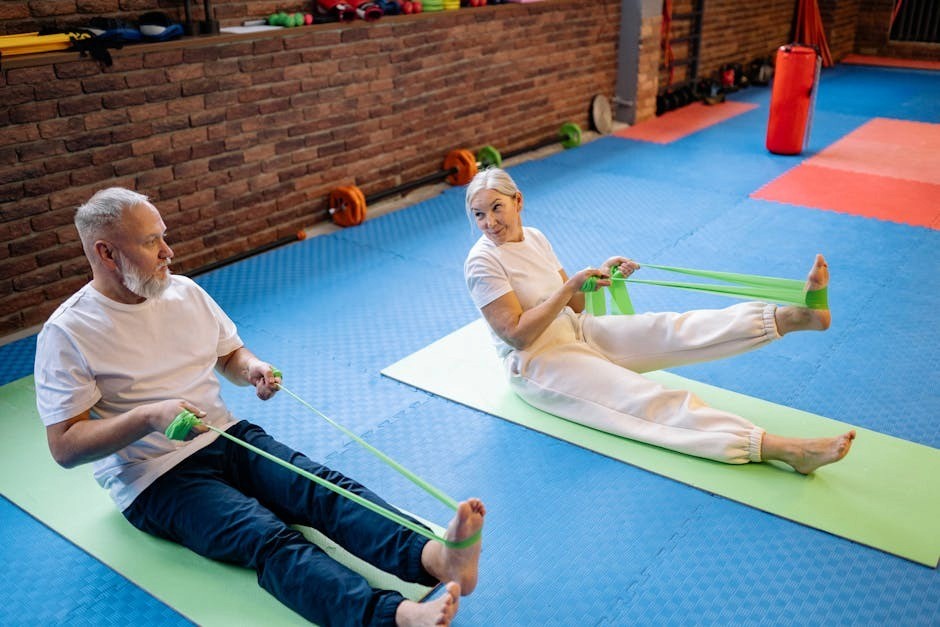
Photo by Yan Krukau on Pexels.
What protein strategy works best for aging muscle?
Older adults often benefit from higher protein intake per meal, spread across the day, with an emphasis on high-quality, leucine-rich sources. This helps overcome the weaker anabolic response seen in aging skeletal muscle.
Protein timing and protein quality both matter. Because aging muscle is less sensitive to a small protein dose, larger and more evenly distributed servings may be more effective than one large dinner and low-protein meals earlier in the day.
Leucine is especially important because it helps trigger muscle-building signaling. Reviews and meta-analyses suggest leucine-rich supplements can improve muscle strength in sarcopenic older adults, although they work best as part of a broader nutrition and exercise plan.
For many older adults, the practical target is not a single “magic food,” but a pattern: enough total protein, enough per meal, and enough resistance training to make that protein useful.
A review in older adults suggests approximately 0.4 g protein/kg per meal, or 1.2–1.6 g/kg/day overall, may be appropriate in the setting of anabolic resistance.
A 2022 meta-analysis found leucine-rich protein supplements improved muscle strength in sarcopenic older adults.