Summary
Research shows that as much as 40% of the weight lost on GLP-1 medications like semaglutide and tirzepatide can come from lean muscle rather than fat.
Losing muscle slows your resting metabolism, which is a big reason people regain weight after stopping the medication — the STEP 1 extension found two-thirds of lost weight came back within a year.
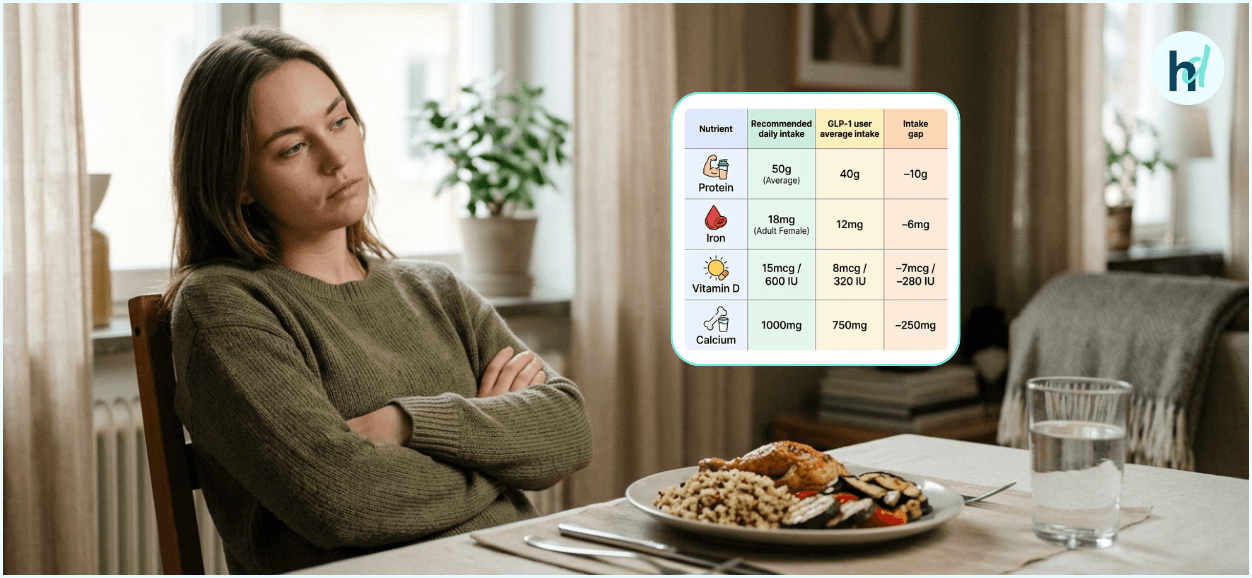
The muscle loss is driven by the nutritional gap the drug creates: appetite suppression cuts protein and calories below what the body needs to maintain muscle.
You can protect muscle with three things together — 1.2–1.6g of protein per kg of body weight daily, resistance training at least twice a week, and a slower, controlled rate of weight loss.
The scale is moving. So why do you feel weaker?
If you're on a GLP-1 medication like semaglutide (Ozempic or Wegovy) or tirzepatide (Mounjaro or Zepbound) and you've noticed you're losing weight but feeling weaker, more tired, or looking 'softer' despite the numbers going down — you're not imagining it. There's a clinical reason for it, and it's one of the most under-discussed side effects of these medications.
What the research actually shows
A systematic review published in PubMed examined 1,541 patients across six semaglutide studies and found that lean mass reductions ranging from near zero to 40% of total weight lost were observed depending on the individual. A 2025 report from the American Diabetes Association confirmed the same figure: as much as 40% of weight lost on GLP-1s can come from lean muscle rather than fat.
That number matters more than it sounds. Muscle isn't just about how you look or how strong you are. It's the primary driver of your resting metabolic rate — the number of calories your body burns just to stay alive. When you lose muscle, your metabolism slows. And a slower metabolism creates a dangerous setup for what happens next.
The weight regain trap
The STEP 1 trial extension — one of the largest studies on semaglutide outcomes — found that participants regained two-thirds of their prior weight loss within one year of stopping the medication. A 2025 meta-analysis in eClinicalMedicine found that people stopping semaglutide or tirzepatide regained an average of nearly 10 kg within the first year after stopping.
Here's what most people aren't told: a significant part of that regain risk comes from the muscle loss that happened during treatment. When your metabolic engine is smaller, your body simply can't sustain the weight loss without the drug doing the work. The medication was compensating for the muscle you lost.
Why this happens on GLP-1s specifically
GLP-1 medications suppress appetite so effectively that most people dramatically reduce their caloric intake — often below what the body needs to maintain muscle tissue. When protein intake drops and resistance training isn't in place, the body turns to muscle as a fuel source. It's not the medication itself destroying muscle. It's the nutritional gap the medication creates.
What actually prevents muscle loss on GLP-1s
Research and clinical experience point to three things that work together:
1. Protein intake — aim for at least 1.2–1.6g per kg of body weight daily. When appetite is suppressed, this requires deliberate structuring of meals, not just 'eating more protein'.
2. Resistance training — even two sessions per week of bodyweight or light dumbbell work sends a preservation signal to your muscles. A 2024 case series in PMC showed patients who incorporated resistance training lost as little as 6.9% lean mass versus the typical 25–40%.
3. Controlled rate of weight loss — losing weight too fast accelerates muscle loss. Slower, supported weight loss preserves more lean tissue.