Summary
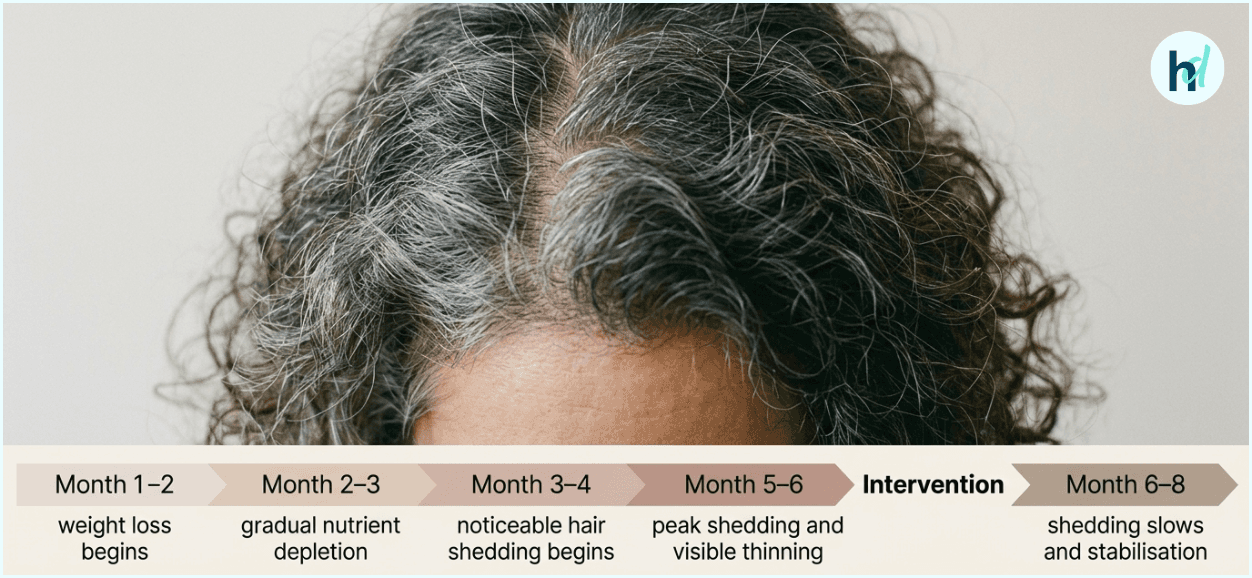
GLP-1 hair loss is usually telogen effluvium — temporary shedding triggered by rapid weight loss and nutrient depletion, typically appearing 2–4 months after starting.
A real-world cohort of 547,993 patients linked GLP-1 use to a 76% higher risk of telogen effluvium at 12 months, with the strongest association for semaglutide.
The main drivers are nutritional: low iron/ferritin, zinc, vitamin D, and not enough protein or lysine for hair synthesis.
It's reversible — correcting the nutrient gaps and slowing weight loss usually stabilises shedding within 6–8 weeks, with regrowth over 3–6 months.
Losing hair while trying to get healthier is a particular kind of difficult
Hair loss is one of the most emotionally distressing GLP-1 side effects — and one of the least discussed. It doesn't show up dramatically on day one. It creeps in two to four months after you've started losing weight, which is exactly why most people don't connect it to the medication at all. They assume it's stress, genetics, or just something that's 'happening to them'.
A large real-world cohort study presented at the European Academy of Dermatology and Venereology in 2025 — involving 547,993 matched patients — found that GLP-1 use was independently associated with a 76% increased risk of telogen effluvium at 12 months. The association was strongest with semaglutide.
What's telogen effluvium and why does it happen on GLP-1s?
Telogen effluvium is a form of hair loss triggered by physical stress. When the body experiences a significant shock — rapid weight loss, nutritional deficiency, illness, or major metabolic change — it shifts hair follicles from the active growth phase (anagen) into the resting phase (telogen) prematurely. About 2–4 months later, those follicles shed. That delay is why you lose hair long after the trigger event began.
On GLP-1s, the trigger is typically a combination of rapid weight loss and nutritional depletion. A 2025 review published in PMC identified the key culprits: iron deficiency, zinc deficiency, low vitamin D, biotin depletion, and insufficient lysine — an amino acid critical to hair protein synthesis. GLP-1s create all of these deficiencies simultaneously through appetite suppression.
Why the timing fools people
The 2–4 month lag between the nutritional trigger and the hair shedding is the reason most people fail to make the connection. By the time hair loss appears, they feel they've 'adjusted' to the medication. They're not aware that their nutrient stores were being depleted weeks earlier. This delayed onset is also why early intervention matters — addressing the nutritional gaps before shedding peaks leads to much faster stabilisation.
What actually stops and reverses GLP-1 hair loss
Get your ferritin tested — not just hemoglobin. Ferritin (stored iron) drops before anemia shows up, and low ferritin is directly linked to telogen effluvium. Aim for ferritin above 70 µg/L for hair health.
Prioritise dietary protein — particularly lysine-rich sources like chicken, eggs, fish, and legumes. Hair is made primarily of keratin, a protein that requires adequate lysine to synthesise.
Add zinc-rich foods — pumpkin seeds, beef, chickpeas. Zinc is critical for hair follicle function and is commonly depleted in GLP-1 users.
Check and supplement vitamin D — deficiency is present in over 13% of GLP-1 users at 12 months and is independently linked to hair loss.
Slow the rate of weight loss — rapid weight loss accelerates nutrient depletion. A supported, structured approach that maintains nutrient intake while losing fat reduces the shedding trigger significantly.
The good news
Telogen effluvium is temporary. Once the underlying nutritional deficiencies are corrected and weight loss stabilises, the hair growth cycle typically restores itself. Most people see shedding stabilise within 6–8 weeks of addressing the gaps, with regrowth following over the next 3–6 months. The earlier you intervene, the faster the recovery.
Sources: (1) PMC 11909624 — Alopecia & Semaglutide: Connecting the Dots (2025). (2) EADV Congress 2025 — Increased incidence of TE and AGA in GLP-1 users, 547,993-patient cohort. (3) Clinical Obesity 2026 — micronutrient deficiencies in GLP-1 users. (4) Cureus 2025 — Alopecia as emerging adverse effect of GLP-1 agonists.